cases >> Bronkhorst
FROM REPAIRING TO REMANUFACTURING
FROM REPAIRING TO REMANUFACTURING
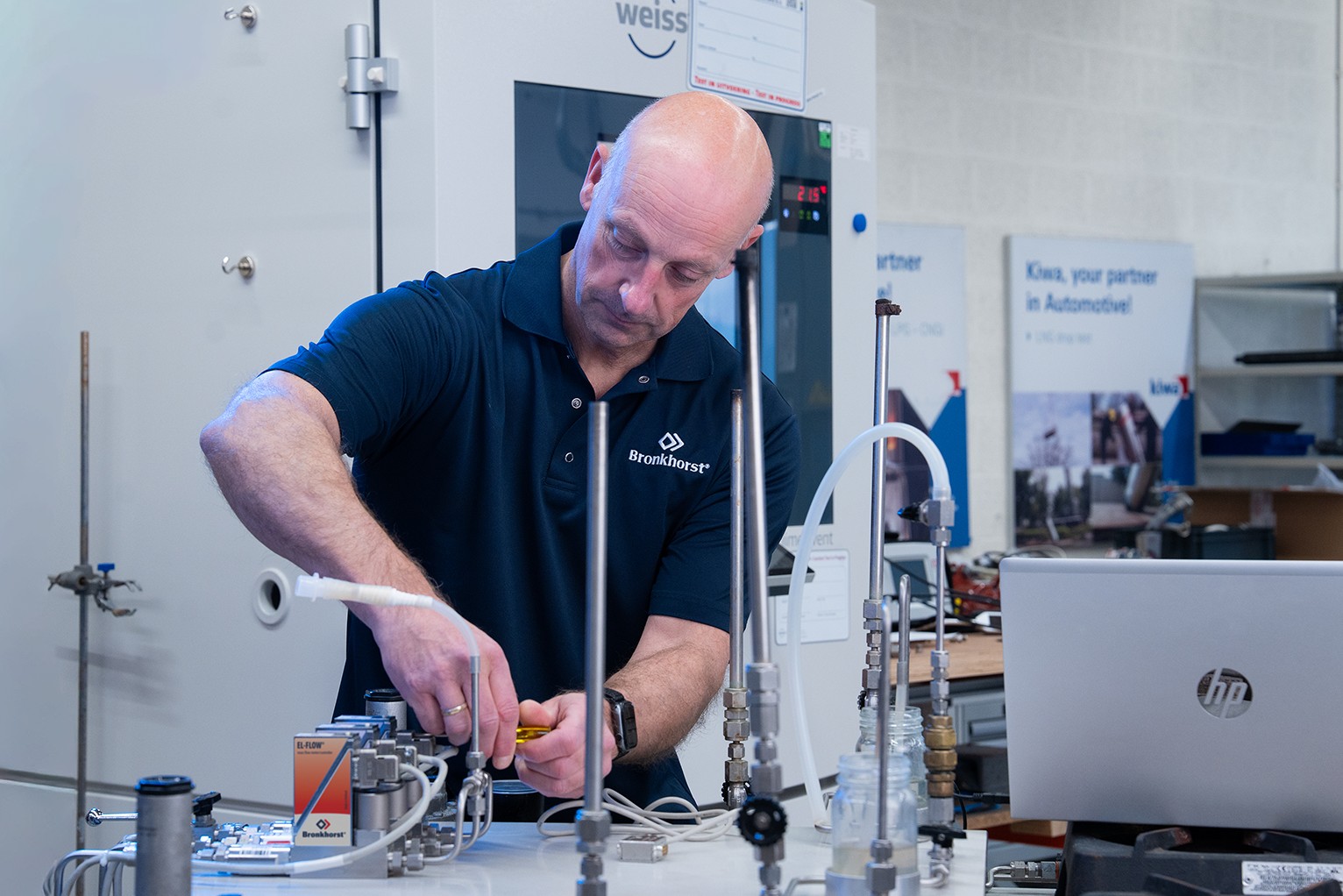
At Bronkhorst High-Tech in Ruurlo, Gelderland, everything revolves around precision and reliability. The company develops flow meters and controllers for the semiconductor industry, laboratories, and medical applications. Bronkhorst recently joined the Remanufacturing Collective of the BOOST Circulair program, which explores how products and components can be given a second life. We spoke with Erwin Gossink, Global Service Organization Manager, whose work is directly affected by this development.
For Bronkhorst, circularity is not a new theme, but something that has long been embedded in the organization. “We have been working on overhauling, calibrating, and modifying our products for years,” says Erwin. Devices hardly wear out and are maintained locally via global service hubs. In addition, the products have a modular design. “Just like with LEGO, we work with basic elements that you can easily take apart and recombine. This allows you to adapt and upgrade products and reuse parts.” One of the best-selling products, the EL-FLOW Series, has had the same foundation for years.
Learning together
To further explore remanufacturing, Bronkhorst is participating in the Remanufacturing Collective within the BOOST Circulair program. Here, manufacturing companies collaborate on developing circular business models and concrete applications. For the organization, this yields immediate valuable insights, including through a joint CO₂ impact analysis and practical tools. In addition, knowledge sharing plays an important role. “The greatest value lies in learning from companies that experiment in practice,” says Erwin. “Especially when something does not seem immediately successful, those experiences provide valuable insights that you can build upon.”
According to Erwin, the biggest challenges of remanufacturing lie not so much in the technology, but in how to bring it to the attention of customers and position it effectively. “How do you get it on the agenda? And how do you make it part of your business model?” He discusses these kinds of issues with other participants within the collective. At the same time, it is also becoming clear in practice where friction still exists.
The challenge: creating value for the customer
Economic feasibility is a crucial factor within remanufacturing. “Completely dismantling a product and rebuilding it with partially new parts is costly. Therefore, it is not automatically cheaper than a new product.” This means that customers need another reason to choose a remanufactured product. “If a customer can choose between new and remanufactured for the same price, there must be another value that is convincing. Sustainability certainly plays a role in this, but it is not always sufficient.”
Towards a circular business model
According to Erwin, remanufacturing starts as early as the design phase. “You have to think in advance about how a product evolves through different life stages. In doing so, you can distinguish between high-, mid-, and low-end applications: a product does not always have to remain at the highest level, but can fulfill a different role at a later stage.” Bronkhorst also wants to bring this idea to the global public's attention. “Ultimately, we want to be able to carry out remanufacturing locally worldwide, so that products and parts do not have to travel all over the world unnecessarily. You have to bring people and organizations along in a different way of thinking,” says Erwin. “A remanufactured product is not an ‘inferior’ choice, but rather a conscious and sustainable option that also has clear benefits. It requires a multidisciplinary approach: from technology to business and customer value. That change takes time, but it is inevitable.”
This program is funded by the provinces of Gelderland and Overijssel and implemented under the program management of Oost NL, in collaboration with Novel-T, Kennispoort Regio Zwolle, RCT Gelderland, BOOST Smart Industry, FME, Koninklijke Metaalunie, Living Lab Rivierenland & Regio Foodvalley Circulair, VNO-NCW, and Ondernemershuis Deventer.
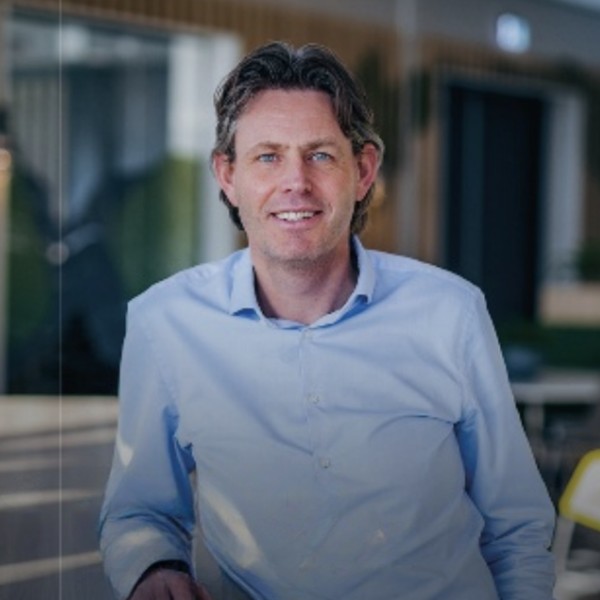
"A remanufactured product is not an ‘inferior’ choice, but rather a conscious and sustainable option that also has clear benefits."
Erwin Gossink
Global Service Organization Manager BronkhorstMore about
Bronkhorst
Founded in 1981 in the Netherlands, Bronkhorst has grown from a small, determined team into a global leader in low-flow measurement and control equipment and services. Yet their approach remains the same: staying practical, making well-considered choices, and always putting relationships first. Today, their instruments and expertise are trusted in more than 100 countries, helping their customers and partners achieve accuracy, reliability, and sustainable results.