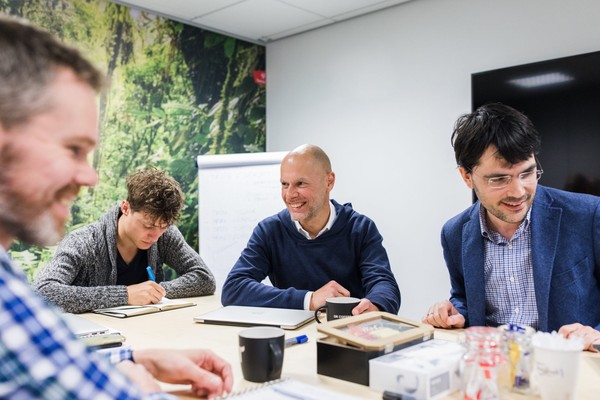
Organizational culture: how do you shape it?

When you launch a new business, you also create an entirely new culture to go with it: your organizational culture. How can you make sure this culture suits your organization and prevent it from growing into something undesirable without you even realizing it? Business developer Lea Milovich explains how to build the right organizational culture for your business from the get-go.
What is an organizational culture?
Your organizational culture is the sum total of the norms and values that apply in your business. “In my personal experience, your organizational culture forms the heart of your organization,” Lea explains. “Every member of your organization must support your organizational culture and it must bring people closer together. Bear in mind that you cannot establish a fully formed organization culture all at once and that it is subject to change as time goes on. Your culture is an ongoing and dynamic process that requires constant attention.”
The strength of your team
Your culture is part of practically everything you do. It is reflected in your ideas, innovations and products. Lea: “It is the result of everything you do together with your team. You all share a common goal and a certain vision. These are shaped by your standards and values, which form the core – the heart – of your business. An organization cannot thrive without a heart; people will go their own separate ways and those all-important personal connections will be missing. It is important to keep that in mind when you form your team. As difficult as it is to find people with the right skills and expertise, it is even more difficult to find people who are on the same wavelength as you.” This should not be underestimated; after all, happy employees are productive employees. “Ultimately, your organizational culture brings people closer together,” Lea aptly states.
Rituals in your organization
To foster this connection, you can adopt rituals that suit your business. “Think of for example daily stand-up meetings, where everyone gets together in the morning to discuss the current state of affairs. At Novel-T, the quarterly meetings, where we all get together and enjoy some drinks and snacks, and the annual team outing are important rituals. These rituals should reflect your organization’s strategy and vision. As your business grows, you can also use these rituals at the team level. You could for example play Secret Santa with your team. Objects can also be important to your culture: think of hanging a poster with your mission statement on the wall or using items with your company logo on them. Have your employees provide input and contribute to the realization. In other words: start with your heart and work from the inside out. This allows you to show your organization for what it is.”
Dynamic
As in a relationship, your business – and your employees and your culture along with it – will go through different phases. “Working on an organizational culture is a lot like working on a relationship,” Lea says. “You must be able to trust each other. To do that, you have to get to know each other. That is not surprising. After your family, your colleagues are usually the people you see most of in your daily life. By organizing shared moments together, you can build that trust and get to know each other better.” What do you if things are not going well on the work floor? “Talk to each other and be open and honest,” Lea advises. “Especially when your culture changes as your business grows, it can take time and effort to adjust. Make sure everyone sees eye to eye again and be open about your goals and ambitions. This process is not always pleasant and can even be painful. At worst, it can break your organization. Usually, however, it will bring everyone closer together in the end. A confidential adviser or someone from outside the organization can help you get through this process. It is like being in a relationship: if you do not discuss the issues you’re having, they will keep coming up over and over again. If you are able to identify and resolve internal difficulties, your entire organization and team will be better for it.”