cases >> ECsens
THE ECSENS METHOD DETECTS CORONAVIRUS AND MAKES EVENTS POSSIBLE AGAIN.
THE ECSENS METHOD DETECTS CORONAVIRUS AND MAKES EVENTS POSSIBLE AGAIN.
Revolutionizing healthcare with smart technology: that is the mission of the ECsens. The researchers behind this UT spin-off are Pepijn Beekman & Dilu Mathew. In 2019, they decided to join forces. Novel-T helped bring their research to market. Because of their unique way of detecting viruses, bacteria and cancer, they quickly became well known. Dilu: “We are the first with this technique, there is nothing like it.” In 2020, they discovered that their method could also detect coronavirus. Where are they now, one year after this discovery?
Existing technology, new insights
When the Netherlands first had to deal with the coronavirus a year ago, Dilu and Pepijn wanted to do research. “We knew it was possible to detect viruses with our technique, so we wrote a proposal together with the University of Twente to find out about more reliable corona detection in the lab,” Pepijn says. At the time of the application, UT was closed except for corona-related research. “We found a way in one year, something that normally takes us up to five years,” says Pepijn. Dilu adds: “Huh, we do feel like we’re five years older now.”
A very own test
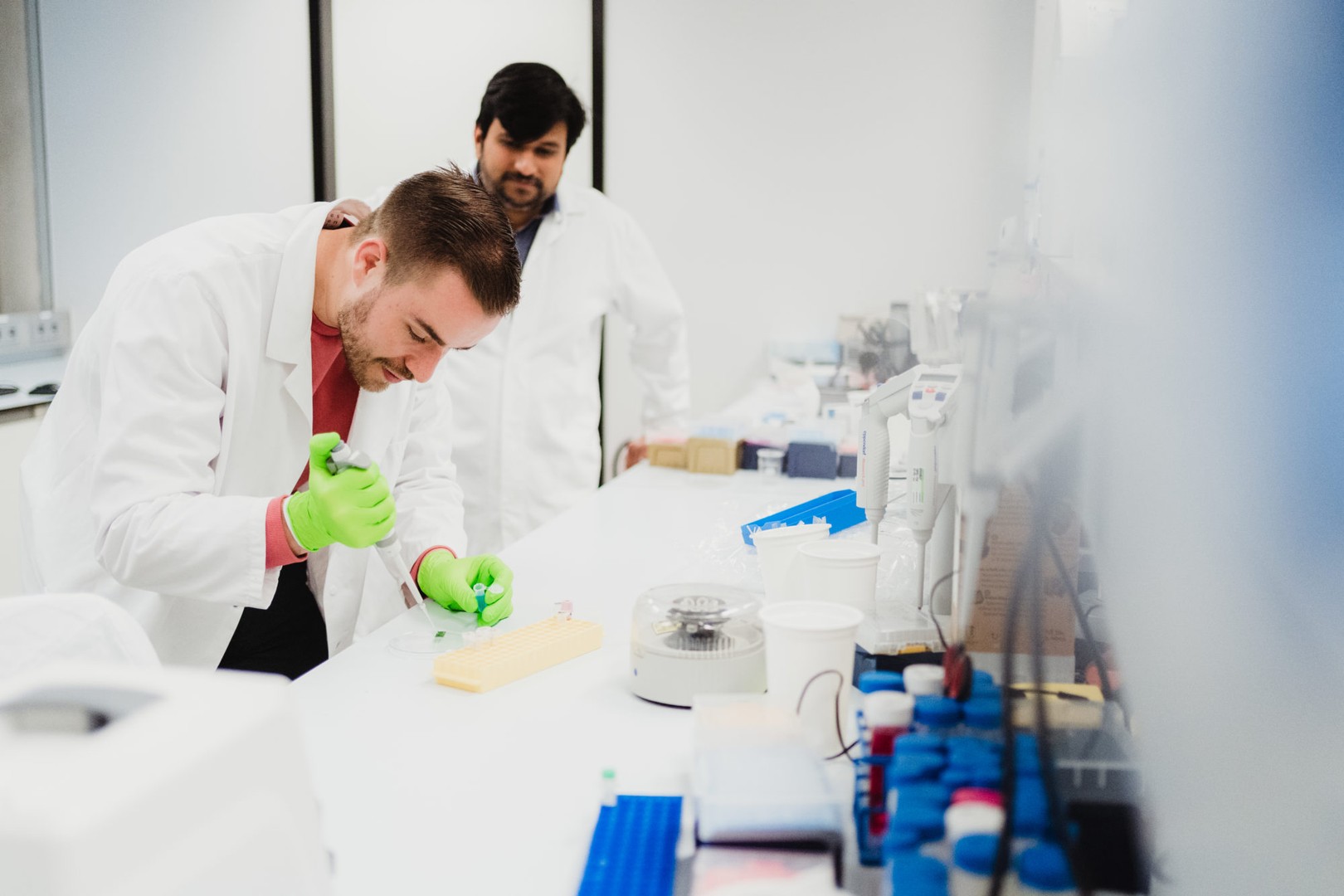
Currently, Pepijn and Dilu are working on a corona rapid test. Entirely based on their existing technology, that enables the identification of biomarkers in the throat or nasal smear. “Our lab-on-a-chip can detect super small biomarkers like coronavirus. We do this with a chip via a box that can immediately show whether someone is infected with the virus, even if there are no symptoms yet,” says Pepijn. One advantage of the method is that the smears from the throat and nose do not have to be sent to a lab first.
Enabling events
Recently, ECsens participated in the Small Business Innovation Research (SBIR) project of the RVO. This is an innovation competition in which the government challenges entrepreneurs to develop innovative solutions for social issues. Together with Hestia, they thought of a way to make ‘safe’ events possible. ECsens was declared one of the nine winners. “We think it’s important that the tests are introduced on the market so that events can take place quickly and safely again,” says Pepijn. ECsens expect to have their test on the market in October.
Fewer treatment thanks to earlier testing
In the future, ECsens sees possibilities for testing from home. “What is important here is that an expert interprets the results of the test,” says Pepijn. Both expect that future testing will be done at an increasingly early stage. “Suppose the coronavirus is no longer as frequently found among us, then the technique can be used to detect viruses, bacteria, cancer, and COPD. Both in humans and animals” says Dilu. “By testing at an earlier stage, treatment can be started early and thereby improving the chances for survival and fewer complications for patients. That is something we want to contribute to,” says Pepijn.
To bring their research to market, Dilu and Pepijn followed the workshops ‘From idea to patent’ and ‘From patent to business’. They also received advice from Roy Kolkman and Semme Molenaar of the KTO . In 2019, they won the 4TU Impact Challenge. Curious about the developments of the spin-off? Find more information on their website.
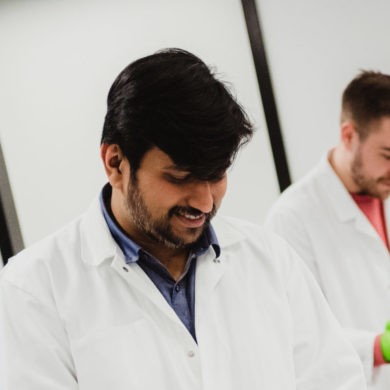
"Our technique can be used to detect viruses, bacteria, cancer and COPD."
Pepijn Beekman & Dilu Matthew
Researchers and founders ECsensMore about
ECsens
Revolutionizing healthcare with smart technology: that is the mission of the ECsens. The researchers behind this UT spin-off are Pepijn Beekman & Dilu Mathew. In 2019, they decided to join forces. Novel-T helped bring their research to market. Because of their unique way of detecting viruses, bacteria and cancer, they quickly became well known. Dilu: “We are the first with this technique, there is nothing like it.” In 2020, they discovered that their method could also detect coronavirus. Where are they now, one year after this discovery?